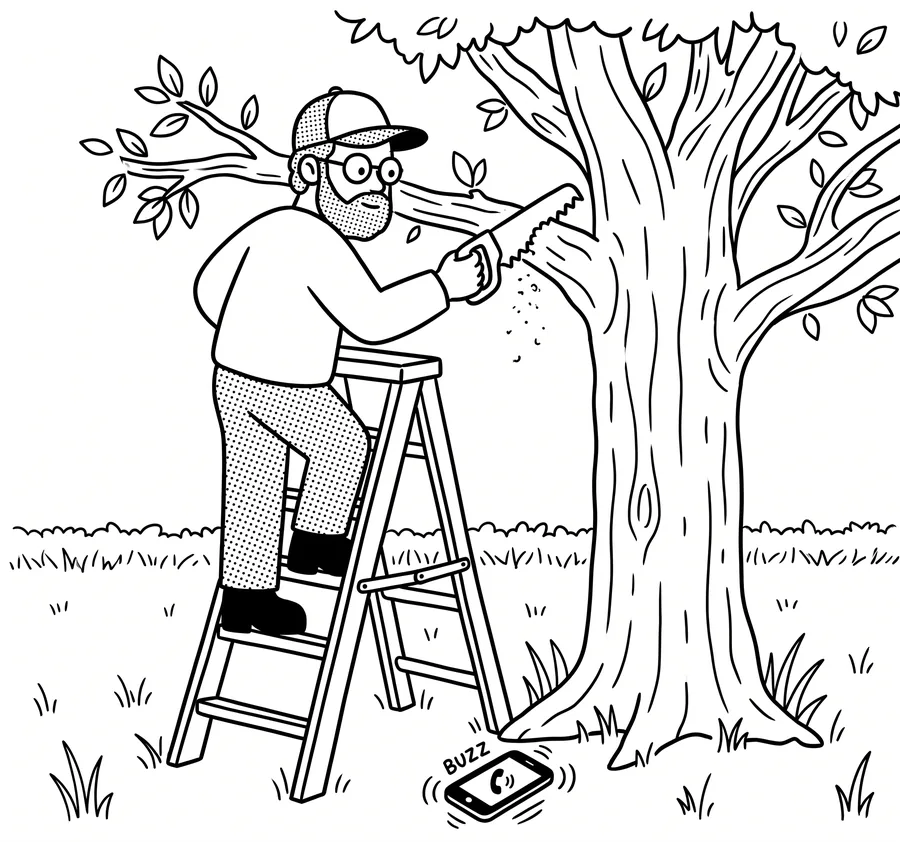
Miss three calls a week, and if only one in three was a real job, you're losing around 50 jobs a year. You don't need to call back faster. You need the customer to get an answer while you're still up the ladder.
The maths
Say you miss three calls a week. Over 46 working weeks that's 138 calls. If one in three was a real job, and an average job is 8,000 DKK, that's around 368,000 DKK a year ringing out.
Put your own numbers in. For most tradesmen that figure lands somewhere uncomfortable.
Why don't they call back?
Because they called three of you. The customer found you, and two others, on Google, and he's working down the list until someone picks up. He isn't waiting — he's already got hold of number two.
It isn't that you're bad at your job. It's that the phone rings when your hands are full.
Four things you can do — cheapest first
1. Call back the same day. Free. Set a fixed time, say 4pm, and work through the list. Works as long as you remember every single day.
2. Record a voicemail that actually says something. "Leave a message" is wasted. "I'm on a job — text me the address and what it's about and I'll come back today" gives you something to work with.
3. Automatic text on missed calls. The customer gets a message within seconds. He knows you've seen him, and he stops working down the list. This is where most of the gain is.
4. Let AI ask the questions while you work. Not just a reply, but a conversation: address, what the job is, how urgent. By the time you finish for the day the details are sitting there and you can quote without three rounds of phone tag.
It isn't about answering faster
You can't pick up with a saw in your hand. The point is that the customer gets an answer — not that you're the one giving it.
An answering system costs 4,500 DKK to set up and 1,200 DKK a month. Compare that to the number you worked out above.
Not sure where you stand? Get a free check — enter your CVR number and I'll send you a report.